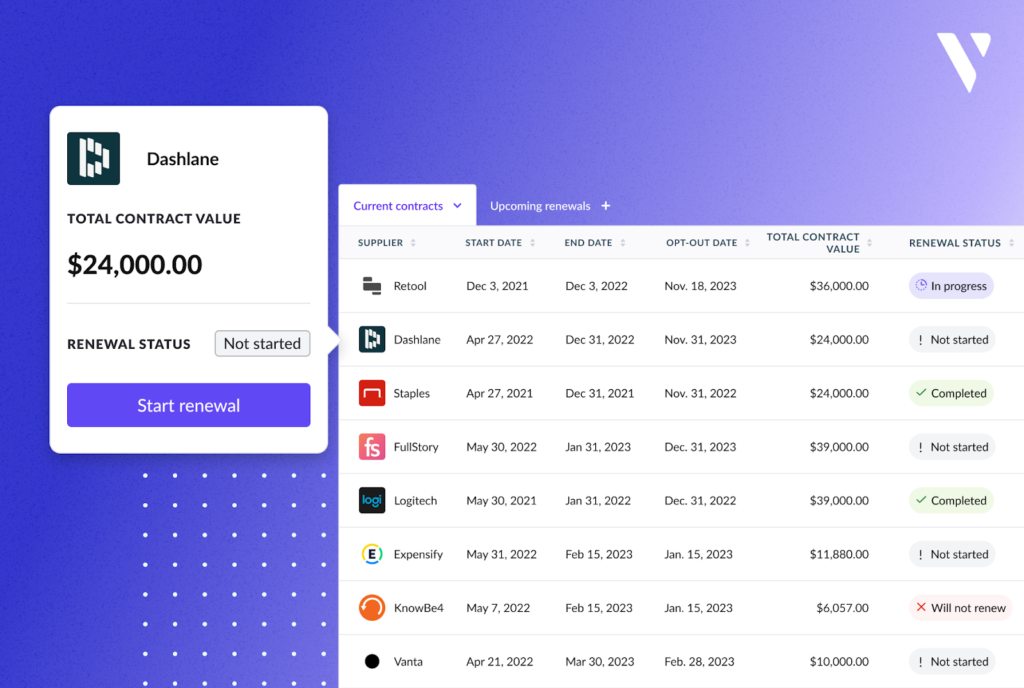
Take control of your business spend with efficient strategies. Learn spend control practices, track expenses, and streamline procurement workflows with Vendr’s solutions.
Ever heard of the Hemingway’s Law of Motion? In the famous novel “The Sun Also Rises”, two war veterans are having a heartfelt conversation. Bill asks Mike how he went bankrupt, to which Mike replies: “Two ways. Gradually and then suddenly.”
Gradually and then suddenly — that’s pretty much how spend control gets out of hand. One unauthorized employee expense follows the next one, or maybe you discover hidden fees within software subscriptions that you’ve been paying for months.
Weak internal spend control policies or systems (and particularly procurement systems) can hamstring your company and lead to lost money. In most cases, cash flow issues become a priority when the damage is already done. But why is that so?
Get free, instant price estimates to ensure you never overpay for software

An overview of spend control
Spend control refers to monitoring, managing, and regulating your expenditures. But it’s not just about cutting costs and limiting business expenses. The best spending policies ensure you’re optimizing company spending in a way that aligns with organizational goals and priorities.
Benefits of spend control include:
- Reduce wasteful spending
- Prevent overspending and unauthorized expenditures
- Better decision-making with access to spending patterns and analytics
- More accurate forecasting and long-term financial planning
- Overall better financial health of the company
Now, let’s take a look at why poor spend control happens in the first place.
What causes poor spend control
Below, we dive into some common reasons behind poor spend control:
Inconsistently applied approvals
If your finance teams still rely on manual processes to manage spend, they might oversee recurring expenses for subscriptions that should have been canceled, for example. The fact that it’s an honest mistake doesn’t change the fact that your company’s been paying for unused tools. Other common errors include inaccurate invoice amounts, misclassification of expenses, or skipping the approval process and overspending (shadow spend).
Get More
https://www.vendr.com/blog/spend-control